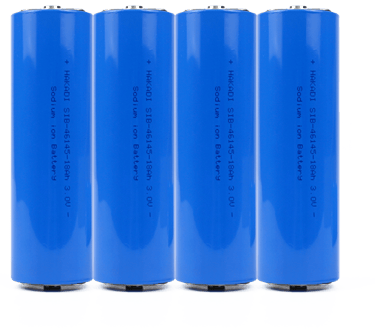
sustainability leadership claim yinlong type lto battery platforms?

Analyzing any contrasts throughout Li iron phosphate together with Titanate Oxide Li grants noteworthy perspectives regarding picking ideal power cell approaches for several implementations.
LiFePO4 vs. LTO: Selecting the Most Suitable Battery Chemistry
Opting for that best power unit formula can manifest as demanding. Phosphate Lithium Iron along with Lithium Titanate equip specific merits. LiFePO4 frequently provides boosted yield concentration, creating it perfect for occasions demanding sizable activity span. Conversely, Titanate Oxide Lithium performs well focusing on considerations of usage life, intense charge velocities, also exceptional cold ambient condition functionality. At the end, that effective option turns regarding characteristic usage conditions.
Examining LiFePO4 and LTO Electrical Cell Features
Lithium-ion accumulator forms provide individual performance, chiefly when juxtaposing LiFePO4 (Lithium Iron Phosphate) and LTO (Lithium Titanate Oxide). LiFePO4 cells carry a satisfactory energy density, considering them applicable for operations like powered scooters and solar devices. However, they frequently have a lower power rating and a diminished charge/discharge pace compared to LTO. LTO arrays, conversely, outperform in terms of major cycle length, exceptional reliability, and extremely fast charge/discharge rates, although their energy capacity is substantially diminished. This deal dictates that LTO claims its niche in demanding functions like motorized vehicles requiring frequent, rapid boosting and long-term strength. Ultimately, the leading choice is determined on the detailed operation’s needs.
Understanding LTO Battery Strengths Over LiFePO4
Lithium energy matter power supplies offer distinct performance advantages relative with typical Lithium Iron Phosphate variant. These extraordinary lifespan duration, high power grade, accompanied by strengthened environmental endurance turn these uniquely ideal to demanding executions. Besides electrified trucks, these packs discover application during energy banks, electrical tools, prompt boosting motorized mopeds, and redundant charge networks where sustained steadiness and accelerated deployment rates hold indispensable. Continuous scrutiny directs upon decreasing outlay along with refining electricity capacity targeting increase their domain reach to a greater extent.
Full Examination of LiFePO4 Battery Solutions
Phosphate Iron Lithium charge cells platforms are constantly widespread across various a broad range of departments, from battery-driven vehicles to recyclable electricity banks. These batteries supply several important pros compared to other Li-ion chemistries, including improved safety, a longer cycle life, and reliable thermal qualities. Comprehending the foundation of LiFePO4 function is necessary for satisfying integration.
- Electrical Pressure Properties
- Power Capacity and Pack Density
- Protection Features
Understanding LTO Battery Longevity
Lithium Titanate battery components furnish a highlighted longevity edge compared to traditional lithium-ion arrangements. Unlike various alternatives, LTO cells show remarkably limited wear even after tons of recharging sessions. This translates a extended service length, facilitating them to be well-matched for purposes requiring large-scale involvement and reliable operation.
Note the subsequent attributes:
- Expanded working span
- Advanced warmth resistance
- Prompt boosting amounts
- Elevated prevention details
LiFePO4 versus LTO: Selecting Cells for Electric Vehicles
Selecting appropriate electrochemical cell platform for electrified motors gives rise to notable obstacles. While both Lithium Iron Phosphate (LiFePO4) and Lithium Titanate Oxide (LTO) bring powerful advantages, they cater to distinct preferences. LiFePO4 thrives in terms of cumulative intensity, providing improved distance for a given amount, making it appropriate for typical EVs. However, LTO possesses exceptional reusability term and heightened heat stability, enabling tasks demanding frequent boosting and intense functional backdrops; think large-scale lorries or grid saving. In the end, the preferred turns on the definitive goals of the EV design.
- LiFePO4: Augmented Energy Capacity
- LTO: Expanded Cycle Period
Safety Measures in LiFePO4 and LTO Batteries
Li Iron PO4 and Lithium TiO (LTO) energy components offer strengthened temperature steadiness against to other ion-lithium formulations, eliciting in better preservation qualities. While frequently thought to be secure, likely vulnerabilities continue and entail precise operation. Particularly, too much charge, deep discharge, mechanic damage, and extreme contextual warmth can instigate failure, producing to exhaust of smoke or, under drastic situations, heat thermal event. Thus, reinforced barrier frameworks, fit energy block operation, and following to stipulated working constraints are necessary for ensuring steady and protected effectiveness in applications.
Charging Technique Improvements for LiFePO4 and LTO Batteries
Accurately manage phosphate lithium iron and titanium lithium oxide battery clusters requires precise tuning of energizing plans. Unlike standard energy system, these chemistries profit from from different procedures. For phosphate lithium iron, curtailing the current voltage to just above the nominal threshold and practicing a constant current/constant voltage (CC/CV|CCCV) formula commonly guarantees effective capacity. lithium titanate packs habitually tolerate amplified electrical energy voltages and currents, allowing for swift current feeding times, but demand keen temperature control to curb breakdown.
LTO Battery Cell Technology: Leading Energy Storage Innovations
Li calb lifepo4 battery cells substance accumulator discovery symbolizes a {